
Picture this: you’ve just accepted a job offer across the country, or maybe you’ve scored a classic car at an auction three states away. Either way, you’re staring down the reality of moving a vehicle hundreds, or even thousands, of miles. It’s not exactly something most of us deal with every day, and the questions pile up fast. How much will it cost? Is my car actually safe on a flatbed for that long? What happens if something goes wrong mid-trip?
We get it. At Bear Creek Towing, we’ve been helping folks navigate long distance towing since 2012, and we’ve seen firsthand how overwhelming the process can feel when you’re new to it. The good news? With the right preparation and a trustworthy towing service, getting your vehicle from point A to point B doesn’t have to be a white-knuckle experience. In this guide, we’ll walk you through everything you need to know before booking a long distance tow, from choosing a reliable service to understanding costs, insurance, and safety considerations along the way.
Understanding Long Distance Towing
Long distance towing typically refers to transporting a vehicle over 100 miles or more, though the exact definition varies by company. Unlike a quick tow to the nearest mechanic, these jobs require more specialized planning, equipment, and coordination. We’re talking about cross-state moves, vehicle purchases from distant sellers, or relocating after a breakdown far from home.
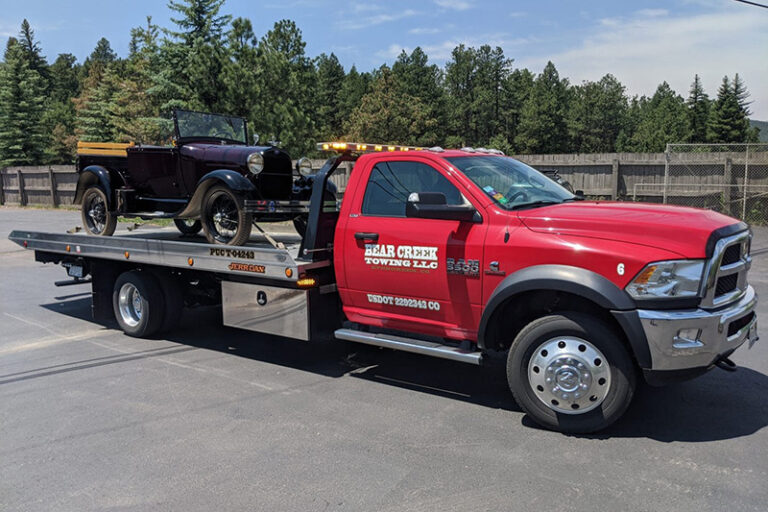
The process generally involves flatbed towing, which keeps your vehicle’s wheels off the ground throughout the entire journey. This is especially important for longer hauls because it minimizes wear on the drivetrain and reduces the risk of damage. At Bear Creek Towing, our fleet includes four-wheel drive Dodge Ram 5500 flatbeds and a medium-duty Freightliner flatbed specifically designed for these kinds of jobs.
Long distance tows also require careful route planning. Drivers need to account for fuel stops, rest periods (federal regulations limit how many hours a driver can operate), weather conditions, and road restrictions for oversized loads. It’s a lot more involved than just hooking up and hitting the highway.
When You Might Need Long Distance Towing
There are quite a few scenarios where long distance towing becomes the smartest, or only, option:
- Vehicle purchases: Buying a car, truck, or motorcycle from a private seller or dealership in another state? Unless you want to fly out and drive it back yourself (which isn’t always practical), having it towed is often the safest bet.
- Relocation: Moving across the country and don’t want to put extra miles on your vehicle? Or maybe you have a second car that nobody’s available to drive?
- Classic and exotic cars: High-value vehicles shouldn’t be driven long distances unnecessarily. Road debris, weather, and general wear can diminish their value. Enclosed or flatbed transport protects your investment.
- Post-accident situations: If your car breaks down or is damaged far from home, you’ll likely want it towed back to your trusted mechanic rather than leaving it with strangers.
- Seasonal moves: Snowbirds heading south for winter or students returning home for summer often need vehicles transported without the hassle of a road trip.
We also handle specialized cargo like motorcycles, boats, trailers, fifth wheels, gooseneck trailers, and even tiny houses. The key is finding a towing service equipped and experienced enough to handle your specific situation.
How to Choose a Reliable Long Distance Towing Service
Here’s the thing about long distance towing: you’re trusting someone with your vehicle for potentially days at a time, often across state lines. That’s a big deal. Not all towing companies are created equal, and cutting corners on this decision can lead to headaches, or worse, damage to your vehicle.
First, look for a company that’s fully licensed and insured. This isn’t negotiable. A legitimate towing operation will carry cargo insurance that covers your vehicle while it’s in their possession. Ask for proof if it’s not clearly stated on their website.
Experience matters too. A company that’s been in business for years (we’ve been at this since 2012, with our family’s towing experience dating back to 1970) has likely encountered every road condition, vehicle type, and logistical challenge imaginable. They’ll know how to handle the unexpected.
Check their equipment. Flatbed towing is the gold standard for long distance transport because the vehicle rides completely off the ground. Companies using wheel-lift tows for long hauls should raise a red flag, that method puts unnecessary stress on the drivetrain over extended distances.
Finally, read reviews. And we don’t mean just the star rating, actually read what people are saying. Look for mentions of communication, timeliness, and vehicle condition upon delivery.
Questions to Ask Before Booking
Before you commit to any towing service, get clear answers to these questions:
- What type of equipment will you use? Confirm they’re using a flatbed, especially for luxury, classic, or all-wheel-drive vehicles.
- Are you licensed and insured? Ask for documentation. Reputable companies won’t hesitate to provide it.
- What’s your estimated timeline? Long distance tows can take anywhere from one day to a week depending on distance and route.
- How do you handle delays? Weather, mechanical issues, and traffic happen. Know the protocol.
- Is there GPS tracking available? Many companies now offer real-time tracking so you can monitor your vehicle’s journey.
- What’s your damage policy? Understand what happens if your vehicle arrives with new scratches or dents.
At Bear Creek Towing, our WreckMaster-trained and certified operators are happy to answer any questions, transparency is part of how we’ve built our reputation.
Cost Factors and Pricing Expectations
Let’s talk money, because this is usually the first question on everyone’s mind. Long distance towing isn’t cheap, but understanding what drives the cost helps you budget realistically and avoid sticker shock.
The biggest factor is distance. Most companies charge a base rate (often called a “hook-up fee”) plus a per-mile charge. Per-mile rates typically range from to , though this varies based on the company, region, and type of vehicle being towed. A 500-mile tow might run anywhere from $1,000 to $2,000 or more.
Vehicle type affects pricing too. Standard sedans and trucks are straightforward. But exotic cars, classic vehicles, motorcycles, and oversized loads like boats or trailers require specialized equipment and extra care, which means higher costs. We handle everything from motorcycles to tiny houses, and pricing reflects the complexity involved.
Other factors that influence cost include:
- Route complexity: Mountain passes, toll roads, and areas with limited fuel stations can add to the expense.
- Time of year: Demand spikes during moving season (summer) and can affect availability and pricing.
- Urgency: Need it there fast? Expedited service costs more than flexible scheduling.
- Enclosed vs. open transport: Enclosed trailers offer more protection but come at a premium.
Always get a written quote before booking. A reputable company will provide a detailed estimate that breaks down all charges. Be wary of quotes that seem too good to be true, low-ball pricing sometimes means hidden fees or subpar service.
Preparing Your Vehicle for a Long Distance Tow
A little prep work goes a long way toward ensuring your vehicle arrives in the same condition it left. Here’s what we recommend doing before the tow truck shows up:
Clean your vehicle inside and out. This isn’t about appearances, it’s about documentation. A clean car makes it easier to photograph existing scratches, dents, or damage before transport. Those photos become your proof if any disputes arise later.
Remove personal belongings. Most towing companies aren’t liable for items left inside the vehicle. Take out valuables, electronics, loose change, and anything that could shift during transport. Some companies have weight restrictions too, so emptying the car helps avoid complications.
Check fluid levels and tire pressure. Even though your car won’t be driven, it still needs to be loaded and unloaded. Proper tire pressure makes this process smoother. And while you’re at it, make sure there are no active fluid leaks that could create a mess, or worse, a fire hazard.
Disable alarms. Nothing’s more annoying for a tow operator than an alarm going off repeatedly during transport. If your car has an aftermarket alarm, disable it or provide instructions.
Document everything. Walk around the vehicle with the driver and note any pre-existing damage on the bill of lading. Take photos with timestamps. This protects both you and the towing company.
Leave about a quarter tank of gas. You don’t need a full tank (it just adds weight), but having some fuel makes it easier to move the vehicle at the destination.
At Bear Creek Towing, we pay special attention to every vehicle we transport, treating it with the same care we’d want for our own cars. But your preparation helps us do our job even better.
Insurance Considerations and Documentation
Insurance can be confusing, but it’s critical to sort out before your vehicle hits the road on someone else’s truck.
First, check your own auto insurance policy. Many policies include some coverage for vehicles being transported, but the details vary wildly. Call your insurance company and ask specifically about coverage during towing, what’s covered, what’s excluded, and whether there are any distance limitations.
Next, verify the towing company’s insurance. Any reputable long distance towing service carries cargo insurance that covers damage during transport. At Bear Creek Towing, we’re fully licensed and insured, and we’re happy to provide documentation upon request. Don’t be shy about asking, if a company gets defensive or evasive, that’s a red flag.
For high-value vehicles (classics, exotics, collectibles), consider purchasing additional transport insurance. The coverage limits on standard cargo policies may not fully protect a car worth six figures. Specialty insurers offer policies specifically designed for vehicle transport.
Documentation checklist before the tow:
- Copy of your auto insurance policy and contact info
- Written quote and service agreement from the towing company
- Proof of the company’s insurance and licensing
- Signed bill of lading with pre-existing damage noted
- Timestamped photos of the vehicle from multiple angles
- Contact information for the driver and dispatch
Keep all of this organized and accessible. If something does go wrong, having proper documentation makes the claims process infinitely smoother.
Safety Tips During the Towing Process
Once your vehicle is loaded and on its way, your job isn’t quite done. Staying engaged throughout the process helps ensure everything goes smoothly.
Stay in communication. A good towing company will provide updates, but don’t hesitate to reach out if you haven’t heard anything in a while. Get the driver’s cell number if possible, or at least a dispatch contact who can relay messages.
Track the shipment. If GPS tracking is available, use it. Knowing where your vehicle is provides peace of mind and helps you plan for its arrival.
Be available at pickup and delivery. Ideally, you (or someone you trust) should be present when the vehicle is loaded and unloaded. This allows you to inspect the car immediately and note any issues on the spot.
Inspect thoroughly upon delivery. Don’t just glance at the car and sign off. Walk around it carefully. Check the undercarriage if possible. Compare it against your pre-transport photos. If you notice new damage, document it immediately and notify the driver before signing the delivery receipt.
Know your rights. If damage occurs, you have the right to file a claim with the towing company’s insurance. Having your documentation in order (photos, bill of lading, written agreements) makes this process much more straightforward.
For those of us in the steep mountain environment around Evergreen, Conifer, and Golden, we know that road conditions can be unpredictable. Our operators have decades of experience handling challenging terrain, but we still appreciate customers who stay communicative and flexible, it makes for a better experience all around.
Conclusion
Long distance towing doesn’t have to be stressful. With the right preparation, a trustworthy towing service, and clear communication throughout the process, you can get your vehicle where it needs to go safely and without surprises.
The key takeaways? Do your assignments when choosing a towing company, licensing, insurance, experience, and equipment all matter. Get everything in writing, document your vehicle’s condition before transport, and stay engaged until it’s safely delivered. And don’t let price alone drive your decision: the cheapest option isn’t always the best value when your vehicle’s safety is on the line.
At Bear Creek Towing, we’ve been helping families and businesses with long distance towing and specialized transport since 2012. Our WreckMaster-certified operators, reliable fleet, and commitment to damage-free towing have made us a trusted name in Clear Creek, Jefferson, and Gilpin counties, and beyond. Whether you’re moving a classic car, a motorcycle, or a tiny house across the state, we’re here to make the process as smooth as possible.
Got questions about an upcoming long distance tow? We’re happy to talk through your options and provide an honest quote. That’s just how we do things.
