
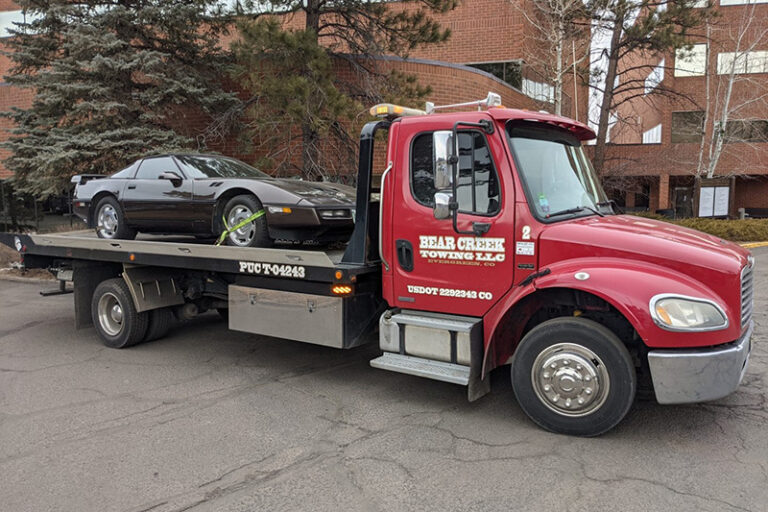
Breaking down on the side of the road is stressful enough without having to worry about your safety. Whether you’ve got a flat tire, an overheated engine, or you’re stuck in a ditch on a mountain road, those minutes (or hours) spent waiting for help can feel like an eternity. And here’s the thing, those moments are when you’re most vulnerable.
Every year, thousands of drivers and passengers are injured or killed in roadside incidents. Many of these tragedies are preventable with the right precautions. We’ve seen too many situations where a little preparation and awareness could have made all the difference. So before you find yourself stranded, let’s walk through exactly what you should do to stay safe while waiting for a tow truck. These tips could genuinely save your life.
Pull Over to a Safe Location
The moment you realize something’s wrong with your vehicle, your first priority is getting off the road. We know it’s tempting to push it just a little further, maybe to the next exit or a gas station, but this can make a bad situation much worse. If your car is sputtering, making strange noises, or you’ve got a warning light screaming at you, don’t ignore it.
Here’s what we recommend:
- Move to the right side of the road whenever possible. The right shoulder is typically safer than the left because you’re farther from fast-moving traffic.
- Look for a flat, stable surface. Avoid stopping on curves, hills, or areas with poor visibility where other drivers might not see you in time.
- Get as far off the roadway as you can. The more distance between your vehicle and passing traffic, the better. If there’s a parking lot, wide shoulder, or rest area nearby, aim for that.
- Avoid soft ground. If you’re on a mountain road or rural highway, watch out for muddy shoulders or ditches that could cause your vehicle to tip or get stuck further.
If you’re dealing with a steep mountain environment, common here in Colorado’s Clear Creek, Jefferson, and Gilpin counties, finding a safe pullover spot can be tricky. Narrow shoulders and winding roads add extra challenges. Do your best to get completely clear of traffic lanes, even if it means driving slowly on a flat tire for a short distance. The tire can be replaced: you can’t be.
Make Your Vehicle Visible
Once you’ve stopped, your next job is making sure other drivers can see you. Visibility is everything when you’re stuck on the roadside, especially at night, in bad weather, or around blind curves.
Using Hazard Lights and Warning Devices
Turn on your hazard lights immediately, this is non-negotiable. Those blinking lights signal to approaching drivers that something’s wrong and they should proceed with caution. Keep them on the entire time you’re waiting for assistance.
But hazard lights alone aren’t always enough. Consider these additional measures:
- Reflective triangles or flares: If you have them (and we strongly suggest keeping an emergency kit in your car), place them behind your vehicle. The general rule is to set them at 10 feet, 100 feet, and 200 feet behind your car, depending on traffic speed and conditions.
- Raise your hood: Even if the problem isn’t under the hood, this universal signal tells other drivers and potential helpers that you’re experiencing trouble.
- Use a white cloth or bright item: Tie something visible to your antenna or hang it from a window. It’s old-school but effective.
- Turn on interior lights at night: This makes your vehicle more visible and helps you see inside your car clearly.
If you’re stuck after dark or in foggy conditions, visibility becomes even more critical. Don’t assume other drivers will see you just because your car is there. Mountain roads especially, think areas like Evergreen, Conifer, or Golden, can have limited lighting and lots of curves. Make yourself impossible to miss.
Stay Inside or Outside Your Vehicle
This is one of the most common questions people have, and honestly, the answer isn’t always straightforward. It depends on your specific situation, the type of road you’re on, and the conditions around you.
When to Remain in Your Car
In many situations, staying inside your vehicle with your seatbelt fastened is the safest option. Your car provides a protective barrier between you and traffic, and it keeps you sheltered from weather conditions.
Stay in your car when:
- You’re on a busy highway or interstate with fast-moving traffic
- There’s no safe place to stand away from the roadway
- Weather conditions are severe (extreme cold, heavy rain, snow)
- It’s dark and you’re in an unfamiliar area
- You’re on a narrow shoulder with no escape route
If you do stay inside, keep your seatbelt buckled. It sounds excessive, but rear-end collisions with stopped vehicles are more common than you’d think. Position yourself as far from traffic as possible, sometimes that means moving to the passenger seat.
When to Exit and Move Away
There are definitely situations where getting out of your vehicle is the smarter move. If you can safely exit and move well away from traffic, this eliminates the risk of being inside a vehicle that gets hit.
Exit your vehicle when:
- You’re on a high-speed road and there’s a safe area (like behind a guardrail) to wait
- You smell gas or see smoke coming from your car
- Your vehicle is in an unstable position (like partially in a ditch)
- There’s a clearly safe spot at least 100 feet from the roadway
Important: Always exit on the side away from traffic, typically the passenger side. This might feel awkward, but it keeps you from stepping directly into the path of oncoming vehicles. Once you’re out, move well away from your car and never stand directly behind or in front of it.
Communicate Your Location Clearly
When you call for roadside assistance or a tow truck, being able to describe exactly where you are speeds up the process considerably. We’ve all been in that frustrating situation where we’re “somewhere on the highway” but can’t pinpoint the exact spot.
Here’s how to communicate your location effectively:
- Use mile markers: These are your best friends on highways and interstates. They’re typically posted every mile and give dispatchers a precise location.
- Note the nearest exit or cross street: If you’re on a surface road, identify the closest intersection or landmark.
- Use your phone’s GPS: Most smartphones can show your exact coordinates. On an iPhone, open the Compass app or share your location through Maps. Android users can find coordinates in Google Maps by dropping a pin on their location.
- Describe distinctive landmarks: A specific business, bridge, overpass, or unusual feature can help the tow truck driver find you faster.
- Mention the direction you were traveling: This helps especially on divided highways where the driver needs to be on the correct side.
When you call for help, also describe your vehicle, make, model, color, and let them know how many people are with you. If you have any special circumstances (you’re in a difficult-to-access spot, you need specialized equipment, your vehicle requires flatbed towing), mention that upfront.
For those of us in the mountain communities, describing your location can be extra challenging. Road names can be confusing, cell service might be spotty, and you might be in an area with few landmarks. If you travel mountain roads regularly, it’s worth familiarizing yourself with common reference points along your usual routes.
Stay Alert and Aware of Your Surroundings
The waiting period is when you need to stay most vigilant. It’s easy to get absorbed in your phone or zone out while you wait, but this is actually when you’re most vulnerable.
Keep these awareness tips in mind:
- Watch approaching traffic: Keep an eye on vehicles coming toward you, especially if you’re outside your car. Distracted drivers might not see you until the last moment.
- Be cautious with strangers: While most people who stop genuinely want to help, not everyone has good intentions. Trust your instincts. If someone makes you uncomfortable, stay in your locked car and communicate through a slightly cracked window.
- Keep your phone charged: This seems obvious, but your phone is your lifeline. If your battery is low, turn off non-essential functions to conserve power. Consider keeping a portable charger in your vehicle.
- Lock your doors: Whether you’re inside or outside your vehicle, keep the doors locked. If you’re standing away from your car, take your keys and valuables with you.
- Know your surroundings: Take note of any businesses, houses, or public places nearby where you could go if you needed help quickly.
In mountainous areas, you might also need to be aware of wildlife and weather conditions that can change rapidly. Snow, ice, and fog can roll in quickly in places like the foothills west of Denver. If conditions deteriorate while you’re waiting, reassess your safety plan.
And here’s something people often forget: don’t let your guard down just because you’ve been waiting a while. Stay alert until your tow truck arrives and you’re safely away from the roadside.
What to Do When the Tow Truck Arrives
You might think the hard part is over once you see that tow truck pulling up, but there are still a few things to keep in mind to ensure everything goes smoothly.
Verify the tow truck: Before handing over your keys, confirm that the driver is from the company you called. Ask for identification and make sure the company name on the truck matches who you contacted. Unfortunately, there are illegitimate operators who cruise for stranded motorists.
Communicate any vehicle issues: Let the driver know about your car’s condition. If it won’t start, has a flat, is stuck in a ditch, or needs special handling, share that information. This helps them use the right equipment and approach.
Ask about the towing method: Different situations call for different approaches. Flatbed towing is often the safest option for many vehicles, especially all-wheel-drive cars or vehicles with significant damage. If you have an exotic car, classic vehicle, or motorcycle, specialized transport may be necessary to prevent damage.
Get the details: Know where your vehicle is being taken, the estimated cost (if not covered by insurance or a motor club), and how long the process will take. Get a receipt or work order.
Stay safe during the hookup: While the tow truck operator works, stay well clear of both vehicles and away from traffic. The professionals know what they’re doing, give them space to do it safely.
Reputable towing companies, like those that are fully licensed, insured, and staffed with certified operators, prioritize damage-free towing and treat your vehicle with care. When you’re dealing with professionals who have experience in challenging environments, whether that’s icy mountain roads or accident recovery situations, you can feel confident your vehicle is in good hands.
Conclusion
Nobody plans to break down on the side of the road, but being prepared for the possibility can make a scary situation much more manageable. The key takeaways? Get to a safe location as quickly as possible, make your vehicle visible, know when to stay in your car versus when to get out (and always exit on the passenger side), communicate your location clearly, and stay alert until help arrives.
We’d also recommend putting together a basic emergency kit for your vehicle if you haven’t already, reflective triangles, a flashlight, a portable phone charger, water, and a basic first aid kit can all come in handy during roadside emergencies.
If you find yourself stranded in the Evergreen, Colorado area or surrounding mountain communities like Conifer, Golden, Morrison, Kittredge, or Idledale, Bear Creek Towing offers emergency roadside assistance including towing and recovery, tire changes, lockouts, jump starts, and fuel delivery. Our WreckMaster-certified drivers have extensive experience navigating the steep mountain environment, and we’re committed to getting you back on the road safely. Stay safe out there, and remember, a little preparation goes a long way.
