
When your vehicle needs to travel hundreds of miles without you behind the wheel, preparation makes all the difference. Whether you’re relocating across the country, shipping a recently purchased classic car, or transporting a vehicle that’s no longer road-worthy, long-distance towing requires more forethought than a quick trip to the local mechanic.
We’ve seen it all in our years of towing experience, from meticulously prepared transports that go off without a hitch to last-minute scrambles that create unnecessary stress for everyone involved. The good news? With the right preparation, you can ensure your vehicle arrives safely at its destination while minimizing headaches along the way.
In this guide, we’ll walk you through everything you need to know about preparing for a long-distance tow, from selecting the right towing company to understanding your insurance coverage and knowing exactly what to expect on towing day.
Understanding Long-Distance Towing Services
Long-distance towing is a different beast than calling for roadside assistance when you’ve got a flat tire. We’re talking about transporting your vehicle over significant distances, often across state lines, which requires specialized equipment, proper licensing, and experienced operators who understand the unique challenges involved.
Most long-distance tows are handled via flatbed trucks, and for good reason. Flatbed towing keeps all four wheels off the ground, eliminating the wear and potential damage that can occur with traditional tow dollies over extended distances. This is especially critical for all-wheel-drive vehicles, luxury cars, and classics where even minor drivetrain stress can cause expensive problems.
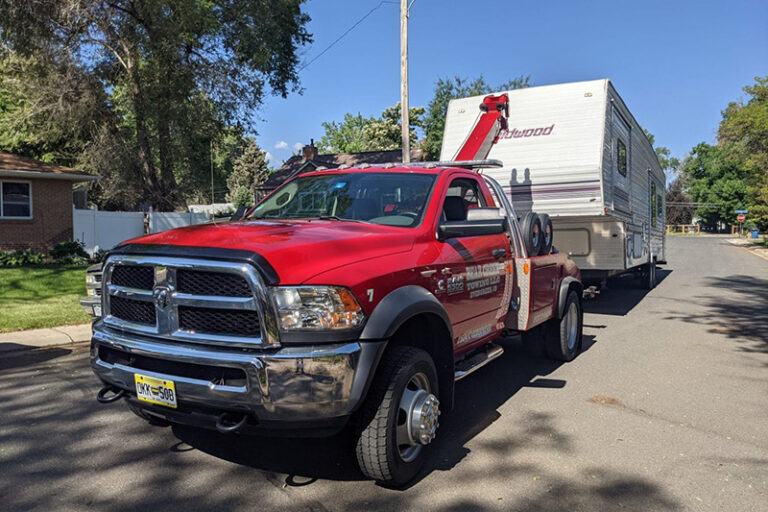
At Bear Creek Towing, we specialize in damage-free towing using our fleet of four-wheel-drive Dodge Ram 5500 flatbeds and a medium-duty Freightliner flatbed. Our WreckMaster-trained and certified operators have extensive experience handling long-distance transports, including exotic and classic car transport, motorcycle transport, and even trailers and boats.
Long-distance towing services typically fall into a few categories:
- Standard vehicle transport: Your everyday cars, trucks, and SUVs
- Specialty transport: Exotic cars, classics, motorcycles, and vehicles requiring extra care
- Oversized loads: Trailers, boats, tiny houses, and cargo that exceeds standard dimensions
- Non-running vehicles: Cars that can’t be driven due to mechanical failure or accident damage
Understanding which category your transport falls into will help you communicate effectively with your towing company and ensure they’re equipped to handle your specific needs.
Choosing the Right Towing Company
Not all towing companies are created equal, especially when it comes to long-distance transport. The company that handles your quick jump-start might not be equipped, or experienced enough, for a 500-mile haul. So how do you separate the professionals from the amateurs?
First, look for a company that’s fully licensed and insured. This isn’t optional. Long-distance towing crosses jurisdictions, and you need a company that maintains proper operating authority. Ask for proof of insurance and verify their coverage limits. A legitimate company won’t hesitate to provide this information.
Experience matters, too. A towing company with decades of combined experience will have encountered virtually every challenge the road can throw at them. At Bear Creek Towing, our experience in the towing and recovery business dates back to 1970, giving us the institutional knowledge to handle complex situations that might catch newer operations off guard.
Read reviews, but read them critically. Look for specific mentions of long-distance jobs, communication quality, and how the company handled problems when they arose. Every company has a few negative reviews, what matters is how they respond and whether patterns emerge.
Questions to Ask Before Booking
Before you commit to a towing company, get clear answers to these questions:
- What type of equipment will you use? For long distances, flatbed towing is typically the safest option.
- Are your drivers certified? WreckMaster certification or equivalent training is a good indicator of professional standards.
- What’s included in the quote? Some companies tack on fuel surcharges, mileage fees, or other costs after the fact.
- What’s your insurance coverage? Understand what’s covered if something goes wrong during transport.
- How will I track my vehicle? Reputable companies offer some form of tracking or regular updates.
- What’s your estimated timeline? Get a realistic window for pickup and delivery.
- Do you have experience with my type of vehicle? If you’re shipping a classic Corvette or a motorcycle, make sure they’ve done it before.
A company built on integrity and customer satisfaction, like ours, will answer these questions directly without hedging or making you feel like you’re being a nuisance.
Preparing Your Vehicle for Transport
Once you’ve selected your towing company, it’s time to get your vehicle ready. Proper preparation protects your car, speeds up the loading process, and helps avoid disputes about pre-existing damage.
Documenting Your Vehicle’s Condition
This step is non-negotiable. Before your vehicle is loaded onto the flatbed, document its current condition thoroughly. We’re talking about:
- Photographs from every angle: Walk around the entire vehicle and capture the front, back, both sides, roof, and undercarriage if possible. Take close-ups of any existing damage, scratches, dents, chips, or rust spots.
- Video walkthrough: A quick video gives you a timestamped record that shows the overall condition at a specific moment.
- Written notes: Create a simple checklist noting any pre-existing damage, unusual sounds, or known mechanical issues.
Share these records with your towing company before they load the vehicle. Most professional operators will conduct their own inspection and provide a condition report, compare it to your documentation to ensure nothing is missed.
This isn’t about distrust. It’s about protecting everyone involved. Clear documentation prevents misunderstandings and makes any legitimate damage claims straightforward to resolve.
What to Remove Before the Tow
Your vehicle shouldn’t be treated like a mobile storage unit during transport. Remove these items before towing day:
- Personal belongings: Everything from sunglasses to phone chargers to that emergency blanket in the trunk. Towing companies typically aren’t liable for items left inside the vehicle.
- Aftermarket accessories: Loose spoilers, bike racks, removable cargo carriers, and similar add-ons should come off. If it can move, it can cause damage.
- Toll transponders and parking passes: Remove or deactivate these to avoid unexpected charges during transit.
- Valuables and important documents: Registration can stay in the glove box, but remove anything irreplaceable.
- Excess fuel: Keep your tank at about a quarter full. This reduces weight and minimizes risk if there’s any fuel system issue.
Also, give your vehicle a basic cleaning, at least enough that the towing team can clearly see the body panels for their condition inspection. You don’t need to detail it, but a layer of mud makes documentation difficult.
Understanding Insurance and Liability Coverage
Insurance for long-distance towing can be confusing, but understanding your coverage before something goes wrong is essential. There are typically three layers of protection to consider.
The towing company’s insurance: Reputable companies carry cargo insurance that covers damage occurring during transport. Ask for their coverage limits and what scenarios are included. At Bear Creek Towing, we’re fully licensed and insured, and we can provide documentation of our coverage upon request.
Your personal auto insurance: Contact your insurance provider to understand whether your policy covers your vehicle during professional transport. Some policies do, some don’t, and some have specific conditions or exclusions. Don’t assume, call and ask.
Supplemental transport insurance: For high-value vehicles or extra peace of mind, you can purchase additional coverage specifically for the transport. This is particularly worth considering for exotic cars, classics, or any vehicle that would be expensive to repair or replace.
Get everything in writing. Before the tow begins, you should have clear documentation of:
- What damage scenarios are covered
- Coverage limits and deductibles
- The claims process if something does go wrong
- Who is liable during loading, transit, and unloading
We work with insurance companies and motor clubs regularly, so we understand the documentation and processes involved. If you have questions about how your insurance interacts with our coverage, we’re happy to help you figure it out.
What to Expect on Towing Day
Towing day shouldn’t be stressful if you’ve prepared properly. Here’s what typically happens during a professional long-distance pickup.
The driver will arrive within your scheduled window, though weather, traffic, and prior pickups can sometimes cause slight delays. A quick heads-up call when they’re 30 minutes out is standard practice for most professional operators.
Once on site, the driver will conduct a walk-around inspection of your vehicle. They’ll note any existing damage on a condition report, which you should review carefully and sign only if you agree it’s accurate. This is where your pre-documentation becomes valuable, compare notes and photos.
If your vehicle runs, you may be asked to drive it onto the flatbed yourself or the driver will handle it. For non-running vehicles, winching equipment will be used to safely load the car. Our operators have extensive experience with winch recoveries, we handle everything from mud extractions to accident scene recoveries in Colorado’s challenging mountain terrain.
The driver will secure your vehicle using professional tie-downs and wheel straps. Don’t be shy about watching this process or asking questions. A confident, experienced operator won’t mind explaining what they’re doing.
Before the truck pulls away, confirm:
- You have the driver’s contact information
- You know the estimated delivery timeframe
- You understand how updates will be communicated
- You have copies of all signed paperwork
Tips for Tracking Your Vehicle During Transit
Once your vehicle is on the road, staying informed helps ease anxiety. Here’s how to keep tabs on your transport.
Establish communication expectations upfront. Some companies offer GPS tracking apps: others provide phone updates at key milestones. Know what to expect before the truck leaves, and don’t hesitate to ask for a system that works for you.
Request checkpoint updates. For multi-day transports, ask the driver to check in when crossing state lines or at planned rest stops. Most professional drivers are happy to send a quick text or photo confirming everything is going smoothly.
Keep contact information handy. Have the driver’s cell number, the company’s dispatch line, and any tracking credentials saved somewhere accessible. You don’t want to be digging through emails if you need to reach someone quickly.
Be realistic about timing. Long-distance towing involves mandatory rest periods for drivers, potential weather delays, and basic logistics. A 1,000-mile transport doesn’t happen overnight. Trust the timeline you were given, and don’t panic if updates are a few hours behind schedule.
Know who to contact for concerns. If you can’t reach the driver or have concerns about the transport, you should have a direct line to the towing company’s office. At Bear Creek Towing, we prioritize customer satisfaction and communication, you’ll never be left wondering what’s happening with your vehicle.
Document the delivery the same way you documented the pickup. When your vehicle arrives, conduct another full inspection before signing off on the delivery. Compare against your original photos and the pickup condition report. Note any new damage immediately, waiting weakens your position if you need to file a claim.
Conclusion
Preparing for a long-distance tow doesn’t require a logistics degree, but it does require attention to detail and choosing the right partner for the job. From understanding what type of service you need to documenting your vehicle’s condition and knowing your insurance coverage, each step you take upfront makes the actual transport smoother and less stressful.
The most important decision you’ll make is selecting a towing company with the experience, equipment, and integrity to handle your vehicle with care. Look for certified operators, proper insurance, and a track record of customer satisfaction.
At Bear Creek Towing, we’ve built our reputation on damage-free towing and treating every vehicle, whether it’s a daily driver or a prized classic, with the utmost care. Our family-owned operation has been serving Colorado’s mountain communities since 2012, and our experience in towing and recovery goes back over five decades.
If you’re preparing for a long-distance tow and want a team you can trust, we’re here to help. Place your vehicle in trustworthy hands and let us get it where it needs to go, safely and professionally.
