
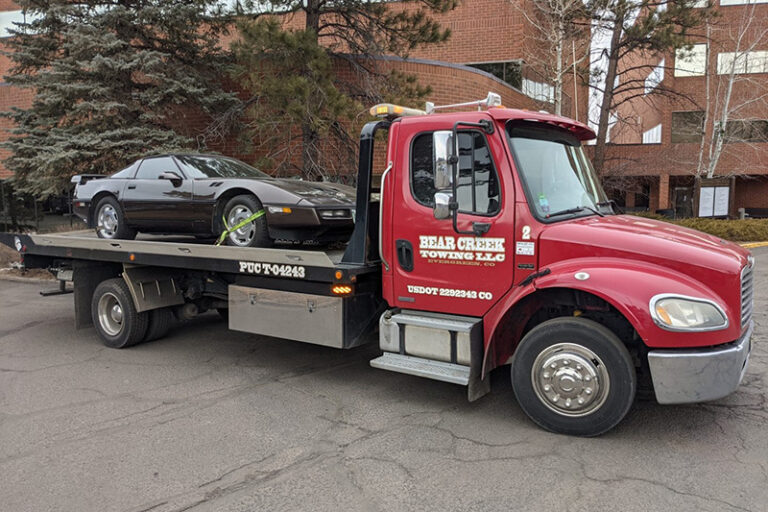
Getting your vehicle towed shouldn’t mean coming home to a $3,000 repair bill. But here’s the thing: improper towing can wreck your transmission faster than almost anything else. Whether you’re stuck in a snowbank on Highway 74 near Evergreen or dealing with a breakdown on the winding roads through Conifer, how your car gets moved matters a lot.
At Bear Creek Towing LLC, we’ve seen firsthand what happens when vehicles are towed incorrectly. Burned-out transmissions, damaged differentials, costly repairs that could have been avoided entirely. The good news? Most transmission damage during towing is preventable if you know what to watch for and how to communicate with your tow operator.
This guide covers everything you need to know to protect your vehicle’s drivetrain during a tow. We’ll break down why transmissions are so vulnerable, which towing methods work best for different vehicles, and exactly what to tell your tow truck driver to keep your car safe.
Key Takeaways
- Flatbed towing is the safest method to avoid transmission damage because all four wheels stay off the ground, eliminating drivetrain stress.
- Automatic transmissions are more vulnerable during towing since they require the engine running to circulate fluid—towing with drive wheels down can cause serious internal damage.
- Always communicate your vehicle’s drivetrain type (FWD, RWD, AWD, or 4WD) and transmission type to your tow operator before the tow begins.
- Check your owner’s manual for manufacturer-specific towing guidelines, including maximum speed, distance limits, and any required procedures.
- Watch for warning signs of transmission damage after a tow, including slipping gears, delayed engagement, unusual noises, and fluid leaks.
Why Transmissions Are Vulnerable During Towing
Your transmission isn’t just sitting there when your car moves. It’s an active system that depends on proper lubrication, temperature regulation, and controlled movement to function. When you tow a vehicle with its drive wheels on the ground, that system gets stressed in ways it was never designed to handle.
The core problem is this: most transmissions need the engine running to circulate fluid. Without that circulation, internal components grind against each other, generating heat and friction. Tow a car just a few miles the wrong way, and you can cause serious internal damage before you even reach the shop.
For drivers in mountain communities like Evergreen, Golden, and Morrison, this is especially important to understand. Our roads involve steep grades and tight curves that put extra strain on any vehicle being towed. A tow that might be fine on flat terrain in Denver could spell trouble on the switchbacks heading up to Kittredge or Idledale.
Automatic vs. Manual Transmission Considerations
Automatic and manual transmissions handle towing very differently, and knowing which type you have changes everything about how your car should be moved.
Automatic transmissions are more vulnerable. They rely on a torque converter and hydraulic fluid that only circulates properly when the engine is running. Tow an automatic with its drive wheels spinning on the pavement, and you’re essentially running those internal components dry. Some manufacturers say you can tow short distances (under 15 miles) at low speeds in neutral, but honestly, it’s a risk we don’t recommend taking.
Manual transmissions are generally more forgiving. Because they use a simpler gear-and-clutch system, you can often tow them with the transmission in neutral without the same lubrication concerns. That said, they’re not immune to damage. If you tow a manual vehicle improperly for long distances, you can still wear out gears and shaft components.
The safest approach for either type? Keep those drive wheels off the ground entirely. That’s why flatbed towing has become the gold standard for protecting vehicles during transport.
Safe Towing Methods for Different Vehicles
Not all towing is created equal. The method that works perfectly for a rear-wheel-drive pickup could destroy an all-wheel-drive sedan. Here’s what actually works for different vehicle types.
Flatbed Towing
Flatbed towing is the safest option for almost any vehicle. Your car rides on a flat platform with all four wheels completely off the ground. No drivetrain stress, no spinning components, no risk of transmission damage.
This method is essential for:
- All-wheel-drive and four-wheel-drive vehicles
- Automatic transmissions
- Low-clearance sports cars and exotics
- Vehicles with existing mechanical issues
At Bear Creek Towing LLC, our fleet includes four-wheel-drive flatbeds specifically equipped to handle the challenging terrain around Evergreen and Conifer. When you’re recovering a vehicle from a ditch on a snowy mountain road, a flatbed ensures your car arrives at its destination in the same condition it left.
Dolly Towing
A tow dolly lifts either the front or rear wheels while the other set rolls on the ground. It’s a solid middle-ground option when flatbed towing isn’t available.
For front-wheel-drive vehicles: The dolly lifts the front wheels, keeping the drive wheels off the pavement.
For rear-wheel-drive vehicles: You’ll want the rear wheels lifted instead.
Dolly towing works well for many situations, but it requires knowing exactly which wheels power your vehicle. Get it backwards, and you’re right back to the transmission damage problem.
Four-Wheel Towing Precautions
Four-wheel towing means all wheels stay on the ground while your vehicle gets pulled. This is the riskiest method for transmission health and should only be used in very specific circumstances.
Some vehicles, particularly certain manual transmission trucks and RVs, are designed for flat towing with all wheels down. The owner’s manual will specify if this is safe and outline exact procedures, usually involving running the engine briefly or engaging a driveline disconnect.
For most passenger cars? Skip this method entirely. The potential for transmission damage just isn’t worth the minor cost savings over a flatbed or dolly.
Preparing Your Vehicle Before a Tow
A little preparation before the tow truck arrives can save you a lot of headaches later. Here’s what to do while you’re waiting.
Check your owner’s manual. Every vehicle has specific towing guidelines from the manufacturer. Some cars have towing capacity limits (maximum speed, maximum distance). Others require the engine to run briefly before towing or have driveline disconnect procedures. Your manual is the definitive source for this information.
Shift to neutral if appropriate. For most manual transmissions, putting the car in neutral before towing is the right move. For automatics, this depends on the manufacturer’s recommendations, so don’t assume.
Release the parking brake. This sounds obvious, but it gets overlooked more often than you’d think. A locked parking brake combined with an attempt to tow can damage brakes, tires, and drivetrain components.
Document the vehicle’s condition. Take a few photos of your car before it gets loaded. Note any existing damage. This protects both you and the towing company if questions come up later.
Gather key information. Know your vehicle’s make, model, year, and drivetrain type (front-wheel drive, rear-wheel drive, all-wheel drive, or four-wheel drive). This helps the tow operator choose the right equipment and method.
If you’re stuck on the side of the road near Morrison or Idledale, we know you’re probably stressed and just want to get moving. But taking five minutes to prepare properly can prevent transmission problems that take weeks to fix.
What to Tell Your Tow Truck Operator
Clear communication with your tow operator is one of the best ways to avoid transmission damage during a tow. When you call for service, have this information ready:
Vehicle basics:
- Year, make, and model
- Transmission type (automatic or manual)
- Drivetrain configuration (FWD, RWD, AWD, or 4WD)
Current situation:
- Where exactly you’re located
- What happened (accident, breakdown, stuck in snow, etc.)
- Any specific damage or mechanical issues you’re aware of
Towing preferences:
- Request flatbed towing if your vehicle has an automatic transmission or all-wheel drive
- Mention if you have a low-clearance vehicle, exotic car, or classic that needs special handling
- Ask about their procedures for protecting transmissions
A good tow operator will already know to ask about these details, but don’t be shy about volunteering the information upfront. You know your vehicle better than anyone.
This is where working with experienced, trained professionals makes a real difference. Our WreckMaster-certified operators at Bear Creek Towing LLC are trained to assess each vehicle and choose the right approach. We ask the right questions because we’ve seen what happens when someone doesn’t.
For drivers in the Golden and Conifer areas especially, mountain towing brings additional considerations. Snow, ice, steep grades, and limited access roads all factor into how a tow should be performed safely.
Signs of Transmission Damage After Towing
Even with the best precautions, things can sometimes go wrong. Knowing the warning signs of transmission damage lets you catch problems early, before they become catastrophic failures.
Watch for these symptoms after your vehicle has been towed:
- Slipping gears: The transmission unexpectedly shifts or fails to hold a gear under load.
- Delayed engagement: A noticeable pause when shifting from park to drive or reverse.
- Unusual noises: Grinding, whining, or clunking sounds you didn’t hear before.
- Overheating: The transmission temperature warning light comes on, or you notice a burning smell.
- Fluid leaks: Red or brown fluid pooling under your vehicle.
- Rough shifting: Harsh or jerky gear changes that feel different from normal operation.
If you notice any of these issues after a tow, get your vehicle inspected promptly. Transmission problems rarely fix themselves, and catching damage early usually means cheaper repairs.
Worth noting: not every post-tow issue is transmission-related. Sometimes vehicles sit at odd angles during recovery, which can trigger warning lights or cause fluids to settle strangely. A quick inspection by a qualified mechanic can sort out what’s actually going on.
The best defense against transmission damage is professional towing that accounts for your vehicle’s specific needs from the start. When your drive wheels never touch the ground during transport, there’s simply no mechanism for the transmission to sustain damage.
Conclusion
Protecting your transmission during a tow comes down to a few key principles: keep drive wheels off the ground when possible, know your vehicle’s drivetrain type, and communicate clearly with your tow operator. Whether you’re dealing with a breakdown in Evergreen, a fender-bender in Morrison, or getting stuck on a snowy side road near Kittredge, these basics apply.
The mountain roads around our communities are beautiful, but they’re also demanding on vehicles. When something goes wrong, you need a towing service that understands both the terrain and the technical requirements of modern drivetrains.
Bear Creek Towing LLC serves Evergreen, Conifer, Golden, Morrison, Kittredge, and Idledale with a fleet of four-wheel-drive flatbeds and wreckers operated by WreckMaster-certified professionals. We’re fully licensed and insured, and we take damage-free towing seriously. Your vehicle deserves to arrive at its destination in the same condition it left.
If you need a tow, give us a call. We’ll make sure your car gets moved the right way.
Frequently Asked Questions
How can I avoid transmission damage during a tow?
The best way to avoid transmission damage during a tow is to keep your drive wheels off the ground. Request flatbed towing for automatic transmissions and all-wheel-drive vehicles. Always communicate your vehicle’s drivetrain type to the tow operator and follow your owner’s manual guidelines.
Why is flatbed towing the safest method for my vehicle?
Flatbed towing keeps all four wheels completely off the ground, eliminating drivetrain stress and preventing transmission components from spinning without proper lubrication. This method is essential for all-wheel-drive vehicles, automatic transmissions, and low-clearance cars to prevent costly damage.
Can towing an automatic transmission car damage it?
Yes, automatic transmissions are particularly vulnerable during towing. They rely on hydraulic fluid that only circulates when the engine runs. Towing with drive wheels on the ground causes internal components to grind without lubrication, potentially causing serious damage even over short distances.
What should I tell the tow truck driver to protect my transmission?
Provide your vehicle’s year, make, model, transmission type (automatic or manual), and drivetrain configuration (FWD, RWD, AWD, or 4WD). Request flatbed towing for automatic or all-wheel-drive vehicles, and mention any low-clearance or mechanical issues requiring special handling.
What are signs of transmission damage after towing?
Watch for slipping gears, delayed engagement when shifting, grinding or whining noises, transmission overheating warnings, red or brown fluid leaks, and rough or jerky shifting. If you notice these symptoms after a tow, get your vehicle inspected promptly to prevent further damage.
Is it safe to tow a manual transmission car in neutral?
Manual transmissions are generally more forgiving and can often be towed in neutral without the same lubrication concerns as automatics. However, long-distance towing can still wear out gears and shaft components. When possible, flatbed towing remains the safest option for any transmission type.
